

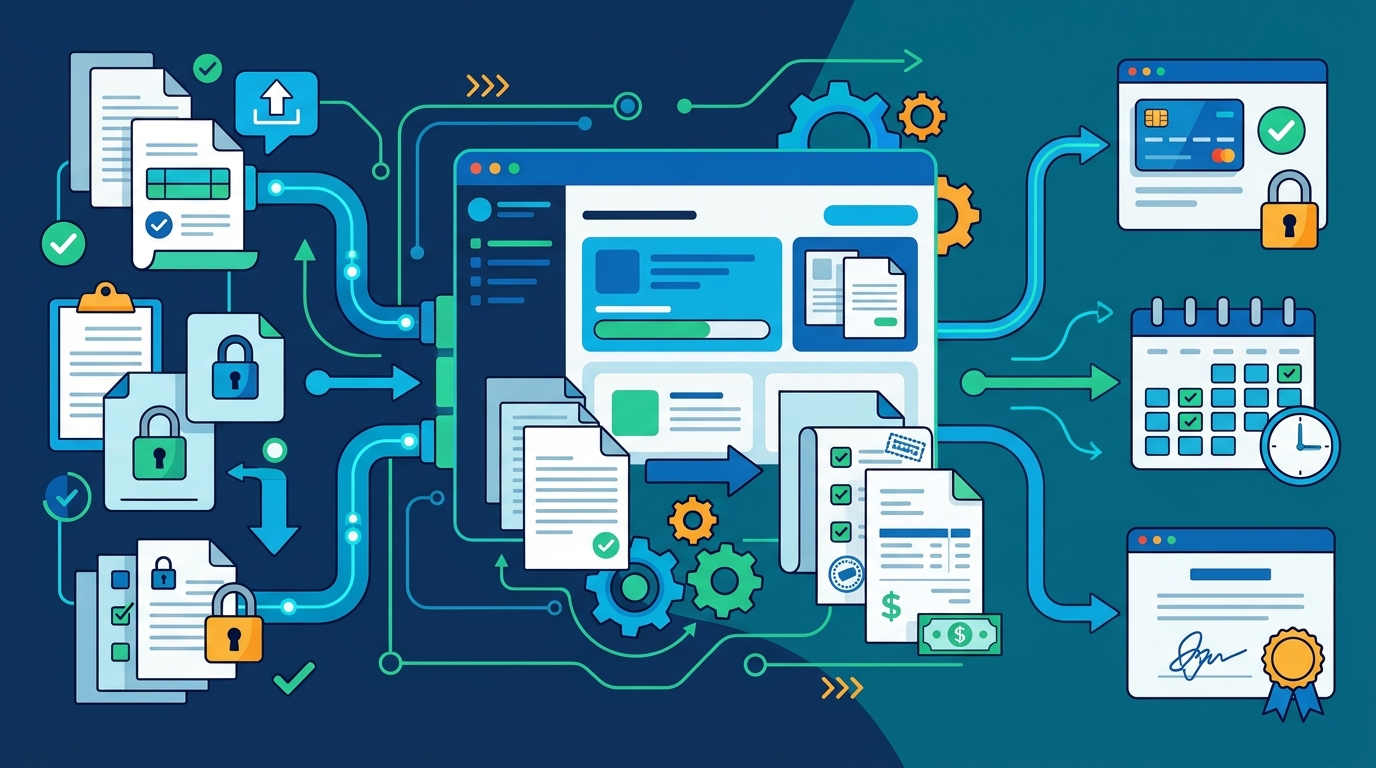
Small businesses should prioritize platforms that offer secure document exchange, real-time quote generation, and direct integration with existing calendars and payment systems. A robust client portal is a secure, web-based interface that allows customers to submit information, review proposals, and approve work without email chains. Adstonix engineers these custom systems to eliminate manual paperwork and accelerate revenue cycles for local service providers.
Defining the Core Functionality of a Client Portal
Many business owners confuse a generic file-sharing tool with a true client portal. A client portal is a dedicated digital workspace designed for specific business workflows, such as intake and quoting. It is not merely a place to store PDFs; it is an active tool that guides the customer through a structured process. The primary goal is to reduce friction between the first inquiry and the final signed agreement.
For service businesses, the intake phase is critical. If a customer has to email photos of a damaged roof or a broken appliance, the process is slow and error-prone. A proper portal allows for structured data entry. This means the customer fills out specific fields, such as the type of service needed or the address of the job site. This structured data is far more useful for a technician than a vague email description. It ensures that the first visit is productive and that the quote is accurate.
The Impact of Real-Time Quote Calculators
Manual quoting is one of the biggest bottlenecks in small business operations. Proposals often take several days to prepare manually over email. This delay gives customers time to call competitors. A real-time quote calculator is a feature that allows customers to configure their own project requirements and receive an instantaneous price estimate. This feature transforms the sales process from a slow back-and-forth into an immediate interaction.
When a customer can see a price instantly, they feel more in control of their budget. This transparency builds trust. For the business owner, it filters out unqualified leads. If a customer sees that a project costs more than they expected, they can self-select out of the process. This saves the business owner hours of time that would have been spent chasing a lead that was never going to convert. The speed of the quote is a direct driver of conversion rates.
Security and Data Privacy Considerations
Client portals handle sensitive information, including home addresses, phone numbers, and payment details. Security is not an optional feature; it is a fundamental requirement. A secure client portal is a platform that uses encryption to protect data in transit and at rest. It must also comply with relevant data privacy regulations. For businesses in regulated industries, such as healthcare or finance, this is even more critical.
Business owners should ask potential vendors about their security architecture. Do they use standard encryption protocols? How is data stored? Who has access to the data? These are not technical questions that require a deep understanding of code to ask. They are business questions that demonstrate due diligence. A vendor that cannot answer these questions clearly is not a safe choice for your business. Your reputation depends on the security of your client data.
Integration with Existing Business Tools
A client portal does not exist in a vacuum. It must work with the other tools your business already uses. This includes your calendar, your CRM, and your payment processor. Integration is the process of connecting different software systems so they can share data automatically. Without integration, you are forced to manually enter data into multiple systems. This is time-consuming and prone to errors.
For example, when a customer books an appointment through the portal, it should automatically appear on your calendar. When they sign a quote, it should automatically create an invoice in your accounting software. This automation eliminates the need for double-entry. It also ensures that your data is consistent across all your systems. When evaluating a platform, ask for a list of supported integrations. If your essential tools are not on the list, you will face significant operational friction.
Evaluating Vendor Support and Ownership
Code ownership means that you own the source code of your custom portal. This is a significant advantage. If you ever decide to switch vendors, you can take your code with you. You are not held hostage by a proprietary platform. Adstonix, for example, offers full code ownership with zero monthly retainers. This model aligns the vendor's incentives with your long-term success. It ensures that you are not paying for a service you no longer need.
Key Takeaways
- A client portal is a secure, web-based interface for structured intake and quoting.
- Real-time quote calculators reduce proposal time from days to seconds.
- Security and data privacy are non-negotiable requirements for any portal.
- Integration with calendars, CRMs, and payment systems is essential for automation.
- Full code ownership protects your business from vendor lock-in.
- Transparent, milestone-based pricing is often more sustainable than monthly retainers.
Frequently Asked Questions
What is the difference between a client portal and a file-sharing tool?
A file-sharing tool is for storing and sharing documents. A client portal is for managing workflows, such as intake, quoting, and approval. It includes structured forms, real-time calculations, and integration capabilities that file-sharing tools lack.
How long does it take to implement a custom client portal?
Implementation time varies based on complexity. A basic portal can be launched in a few weeks. More complex systems with multiple integrations may take longer. Adstonix typically delivers custom portals in a few weeks.
Do I need to know how to code to use a client portal?
Can a client portal integrate with my existing accounting software?
Yes, most modern client portals offer integrations with popular accounting software. This allows for automatic invoice creation and payment processing. You should verify that your specific software is supported before choosing a platform.
What is the cost of a custom client portal?
Costs vary widely based on features and complexity. Custom portals can range from a few thousand dollars to tens of thousands. Adstonix offers custom suites with transparent, one-time investment pricing.
How do I ensure my client data is secure?
Choose a vendor that uses standard encryption protocols and complies with data privacy regulations. Ask about their security architecture and data storage practices. A reputable vendor will be transparent about their security measures.
Can I own the code of my client portal?
Yes, if you work with a vendor that offers full code ownership. This means you own the source code and can take it with you if you switch vendors. This is a key advantage over proprietary SaaS platforms.
Next Steps for Your Business
Choosing the right client portal is a strategic decision that impacts your revenue and operations. Take the time to evaluate your needs, compare vendors, and ask the right questions. If you are looking for a custom solution that offers full ownership and transparent pricing, Adstonix can help. Schedule a free consultation to discuss your specific requirements and see how a custom portal can transform your business. Learn more: Contact amp Technical Inquiries.